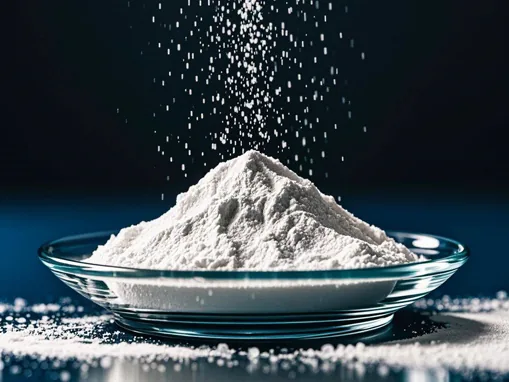
Thermal interface materials need a filler that conducts heat but not electricity. Magnesium oxide is chemically inert, electrically insulating and has useful thermal conductivity — but irregular particles pack poorly and drive viscosity up long before the loading is high enough to matter.
Why the sphere matters
Spherical particles are isotropic, roll past one another and pack to a higher solids loading at a given viscosity. In a silicone or epoxy matrix that means a more continuous thermally conductive path, lower viscosity during dispensing and less abrasive wear on mixing equipment.
What we control
- Sphericity and particle-size distribution, which set packing density and viscosity.
- Surface treatment, which decides how well the filler couples to the polymer matrix.
- Moisture and surface hydroxyls, which affect cure and long-term dielectric behaviour.
If your target is a thermal conductivity value at a stated viscosity, send us both numbers. We will work from the property back to the grade rather than offer a generic powder.
Need the measured values for a specific grade? Ask our technical team for the data sheet and a trial sample.