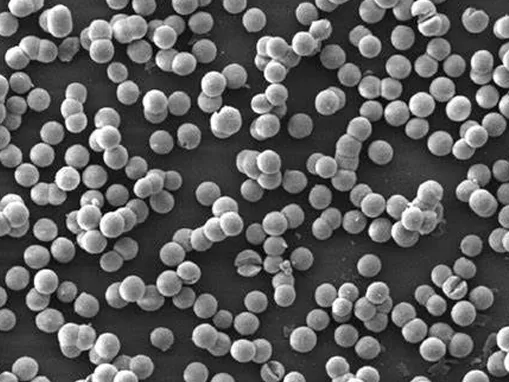
Magnesium oxide is one of the most misunderstood additives in rubber compounding. It is frequently described as an accelerator or a filler. Its real roles are more specific: in chlorinated rubbers such as CR it is the vulcanising agent that neutralises hydrogen chloride released during crosslinking, and in general-purpose rubber it acts as a vulcanisation activator alongside zinc oxide.
Why activity matters more than assay
Because MgO reacts at its surface, a high assay alone is a poor predictor of performance. Active grades are defined by specific surface area and reactivity: ZH-M600, for example, is specified at ≥175 m²/g. A dense, dead-burned oxide of the same nominal purity will scorch slowly and give poor crosslink density.
Practical selection
- CR and other halogenated rubbers: an active, fine MgO with controlled moisture; dosage is set against the acid acceptor demand.
- NR/SBR compounds: light or active MgO as an activator, balanced against ZnO to manage scorch safety.
- Storage: MgO absorbs moisture and CO₂. Keep bags sealed and specify a retest date rather than assuming indefinite shelf life.
Our technical team can supply activity and surface-area data for each grade so that the selection is made on measured behaviour rather than on a generic description.
Need the measured values for a specific grade? Ask our technical team for the data sheet and a trial sample.