In lithium-battery cathode production, magnesium oxide is used in small, deliberate amounts: as a doping source that stabilises the crystal lattice, and as a precursor for surface coatings that suppress side reactions with the electrolyte. In both roles the dose is small and the consequences of contamination are large.
Purity is the first specification
Transition-metal and chloride impurities introduced with the MgO can participate in unwanted electrochemical reactions. High-purity grades such as ZH-V2 (99.7% MgO minimum, chloride ≤0.03%) are specified for this reason, with acid-insolubles and heavy metals reported on the batch certificate.
Particle size is the second
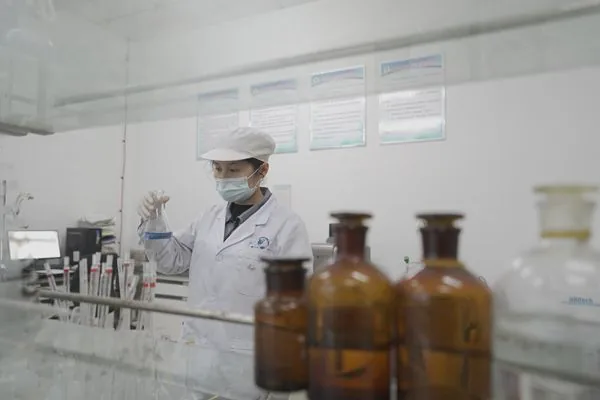
A dopant has to diffuse uniformly during calcination; a coating precursor has to distribute across the cathode surface. Both require a controlled, narrow particle-size distribution rather than simply a fine average. Our laboratory characterises distribution and specific surface area for every trial lot.
From trial to tonnes
Zehui Magnesium works with battery-material producers from target property through trial batch to production supply, backed by 20,000 t/yr of combined magnesium compound capacity and three joint laboratories. If you have a target doping level or coating thickness, send us the value — we will propose a grade and a trial protocol.
Need the measured values for a specific grade? Ask our technical team for the data sheet and a trial sample.